
Publikasi Bukan Sekadar Syarat, tapi Investasi Reputasi: Mengapa Dosen Harus Menulis di Jurnal Bereputasi
05 Dec 2025
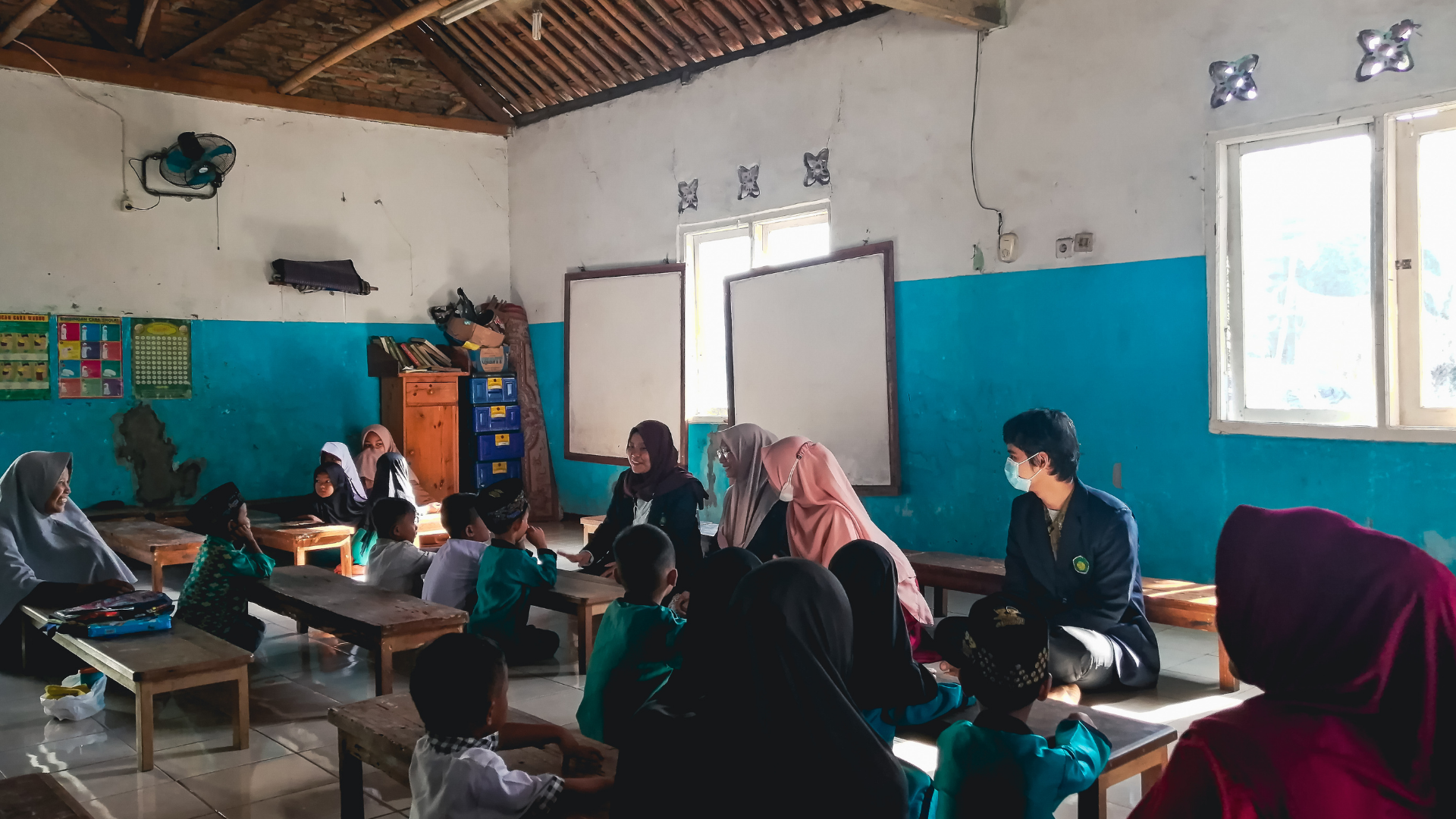
Traditionally seen as towers of academia, Indonesian universities are now asked to come down to the ground and leave a mark beyond campus walls. Kampus Berdampak offers a blueprint for this shift, measuring success by the difference they make in society.
SEVIMA.COM– Across Indonesia today, alumni are increasingly seen as agents of societal impact beyond academic scores or rankings. Think of them as bridge builders; connecting knowledge with the everyday lives of people who need it most. Through programs like Merdeka Belajar Kampus Merdeka (MBKM), graduates have boosted literacy in targeted schools and opened doors to international networks and opportunities – proving university impact matters. Building on this momentum, Indonesia launched a bold new paradigm on National Education Day: Kampus Berdampak.
Introduced formally on May 2nd, 2025 by the Ministry of Higher Education, Science, and Technology, Kampus Berdampak dares to reposition universities as society’s problem solvers. “Kampus Berdampak is not just about producing graduates, publications, or global rankings,” said Khairul Munadi, Director General of Higher Education during the launch of the program. “It is about transforming lives and positioning universities as real centers of solutions for society.”
This vision isn’t just policy on paper. Minister Brian Yuliarto first painted Kampus Berdampak as a national strategy to help universities tackle the country’s most pressing challenges, including climate change, technological disruption, and the rise of artificial intelligence.
Minister Brian Yuliarto unveiled Kampus Berdampak, a strategic framework that establishes universities as pivotal agents in confronting the nation’s most formidable challenges, i.e climate change, technological disruption, and the proliferation of artificial intelligence. In an April 2025 speech, the Minister put it plainly: “Universities must become engines of change,” he said, “and research must not stop at journals, but become products that truly benefit people.”
Change is already unfolding and is offering a different path going forward; one campus at a time. This article dives into the soul of Kampus Berdampak, and serves as a roadmap for campuses seeking to lead in this national transformation.
Minister Brian Yuliarto’s speech in late April 2025 felt more like a striking moment that reverberated across Indonesia’s higher education landscape. His call for universities to deliver measurable societal impact signaled the beginning of a new era, one in which higher education is not merely output-driven but mission-oriented. This vision crystallized on National Education Day with the launch of Diktisaintek Berdampak (Impactful Higher Education, Science, and Technology), the Ministry’s ambitious blueprint overseeing Kampus Berdampak, designed to steer universities from being factories of credentials into engines of real-world solutions.
Positioned as a natural evolution from one program to another, the Directorate General of Higher Education announced the program as the continuation of Merdeka Belajar Kampus Merdeka (MBKM).
The minister and ministry’s declaration signals the turn in Indonesia’s higher education framework; a passing of the baton from “freedom to learn” toward “freedom to make a difference”. This new paradigm positions impact as the ultimate metric of success; impact on communities, industries, and the nation at large. How did this transformation emerge? The rationale lies in the evolution from MBKM to Kampus Berdampak.
Kampus Berdampak materialized from its predecessor – Merdeka Belajar Kampus Merdeka (MBKM). Launched in 2020, MBKM opened the doors for students to step outside the lecture into internships, research labs, and community projects. It gave students the freedom to explore different worlds before graduation and before entering the workforce.
Yet MBKM, for all its groundbreaking promise, primarily focused on student mobility and skill development. Kampus Berdampak dares to widen the lens; shifting the question from ‘What can students achieve?” to “How can the entire university build towards national progress?”. All academic activities, from curriculum design to research and service, are now pushed to contribute directly to national development goals.
As Secretary General Togar Mangihut Simatupang put it, this new paradigm does not replace MBKM, but completes it. MBKM empowered students to wander and discover; Kampus Berdampak hands universities a compass by adding new and improved programs encompassing the academic world, to generate real impact for society.
Kampus Berdampak is best understood as part of a longer journey of Indonesia’s higher education reform. Earlier reforms focused on accreditation and access to knowledge, then later followed by a focus on research and strengthening ties with universities. The paradigm builds on these foundations by pivoting towards societal impact as the benchmark of success. It represents a strategy aiming at making higher education more responsive to national needs.
The differing aspect of this paradigm is its demand for transformation at every level of the university system; in governance, student learning, research focus, partnership, and community service. It draws on global models like University 4.0, which calls for institutions to be digitally responsive, socially inclusive, and innovation-driven. This paradigm then is less of a new initiative, and more of a shift in how institutions define their purpose, measure their success, and interact with society.
The government laid out the infrastructure that frames Kampus Berdampak as an actualization of the current national education goals during the launch of the paradigm. It’s aligned with Indonesia’s broader development strategy, particularly the Asta Cita, also known as the eight-point mission under President Prabowo and Vice President Gibran. It supports at least three core priorities:
To operationalize this, the Ministry of Higher Education has positioned Diktisaintek Berdampak and Kampus Berdampak as a tool to advance national resilience, inclusive innovation, and sustainable development.
Kampus Berdampak reimagines the Tri Dharma Perguruan Tinggi – education, research, and community service – by insisting on measurable, real-world outcomes: graduates who are truly work-ready, research that tackles practical challenges, and service that benefits society directly.
The Ministry’s 2025 agenda for Diktisaintek Berdampak reinforces this shift with impact-based governance and outcome-driven research. University performance is thus reframed, judged not merely by academic metrics but by tangible contributions to Indonesia Emas 2045.
Indonesia faces urgent national challenges, such as technological disruption, digital inequality, climate change, and economic disparities, that demand universities do more than educate; they must become active problem-solvers rooted in their communities. Kampus Berdampak responds to this need by aligning academic activities with national priorities, driving research, innovation, and community programs that directly tackle societal issues.
This urgency was highlighted by Director General of Higher Education, Khairul Munadi, in April 2025, when he urged universities to help combat poverty, reduce child stunting, and boost literacy. Through Kampus Berdampak, campuses are called to step beyond traditional roles and act as strategic partners in national development.
You may ask, “While I know what Kampus Berdampak is now, what initiatives actually spawn from the paradigm?”. The following section answers this very question.
Launched by the Ministry of Higher Education, Science, and Technology, Kampus Berdampak features concrete initiatives that translate its mission into action. These programs span student-centered competitions and internships to cross-sector collaborations. Below are several flagship programs introduced under this paradigm.
Several flagship initiatives stand out:
These programs aim not only to sharpen student competencies, but to produce outcomes that benefit communities and industries.
Launched in June 2025, Magang Berdampak is a continuation of the highly successful Magang dan Studi Independen Bersertifikat (MSIB) program by placing students in sectors like AI, robotics, logistics, and library science. Brian Yuliarto stressed that the real goal isn’t more internships, but nurturing students as agents of change.
Backed by MSIB’s strong track record – its alumni earn salaries averaging 98.62% higher than the national average (according to the 2024 National Workforce Survey) – Magang Berdampak pushes this momentum further. By embedding societal contribution at its core, the program has become a key part of President Prabowo’s higher education agenda.
Kampus Berdampak strengthens student contributions to community development through structured service-learning and capacity-building initiatives. The Directorate of Learning and Student Affairs holds the Capacity Building for Student Organizations program, pushing students to develop villages, strengthen SMEs, partake in environmental management, and others. These activities align with the Tri Dharma Perguruan Tinggi commitment to community service, but with clearer, outcome-based expectations.
To support the systemic shift towards Kampus Berdampak, the Ministry has introduced several programs targeting university governance, leadership, and institutional quality. Programs focused on the quality of universities include Revitalizing Private Universities, strengthening Vocational University’s autonomy and internationalization programs.
Meanwhile, the Ministry strengthens institution’s resources through increasing lecturers and staff’s competence, strengthening facilities and laboratory safety, and mapping the needed facilities for new, outer-area universities. These initiatives are intended to bridge quality gaps across institutions and ensure the paradigm can be implemented nationwide.
The paradigm adopts a quadruple helix approach, fostering collaboration among government, academia, industry, and civil society. Key institutions highlighted in the presentation include the Ministry of Health, the Ministry of Women Empowerment and Child Protection, and Indonesia’s National Library. One upcoming initiative, in partnership with the National Library, will mobilize university students for community literacy campaigns—blending civic engagement with educational development.
Baca juga: Apa Itu Kampus Berdampak? Perwujudan Transformasi Pendidikan Tinggi di Indonesia
As of June 2025, Kampus Berdampak is not yet formalized through a dedicated ministerial regulation. However, its core principles are embedded in existing policies, particularly those introduced under Merdeka Belajar Kampus Merdeka (MBKM).
Key values promoted under Kampus Berdampak include:
These ideals were articulated in the 2024 MBKM Handbook published by the Ministry of Education, Culture, Research, and Technology. MBKM positioned students at the center of Indonesia’s development agenda by encouraging internships, research, entrepreneurship, and community service. Kampus Berdampak builds on this foundation but sharpens the focus: outcomes must be measurable, impactful, and aligned with national goals.
The shift is not only philosophical but strategic. According to Director General Khairul Munadi, Kampus Berdampak adopts a “quadruple helix” model that requires robust collaboration across the academic ecosystem and external stakeholders.
Further details of the initiative were unveiled during the launch of Diktisaintek Berdampak, with the Ministry presenting an integrated program structure for campuses to understand and implement accordingly. This includes hopes for universities to:
The paradigm is already guiding a growing list of Ministry-backed programs, ranging from leadership development and outcome-based research to the expansion of vocational education and university-industry linkages.
So how do universities actually adopt Kampus Berdampak? Keep on reading so you won’t be kept in the dark on this campus-altering paradigm.

While the Kampus Berdampak initiative is still in its early innings, a handful of universities have already taken the field; aligning their activities, academic programs, and community initiatives with this bold vision.
These early adopters serve as living proof that higher education can do more than teach; it can tackle real-world problems through structural change. From upgrading institutional capacity to forging new partnerships, here’s how campuses are turning vision into action.
Bringing Kampus Berdampak to life takes more than drafting visionary programs; it depends on strong institutional capacity and highly qualified staff. Campuses need sustainable funding to fuel student research and community service, staff who can coach and inspire, and infrastructure sturdy enough to host collaborations with other universities. Recognizing this, many universities are doubling down on both people and facilities; investing in staff development while modernizing labs, libraries, and classrooms.
Take Universitas Lampung. They’ve chosen to build people alongside its infrastructure. The university pairs physical upgrades, such as modern classrooms and facilities, with investments in human resources.
A key initiative is leadership training workshops, designed to develop their staff’s skills and equip them to lead institutional transformation. This campus exemplifies how universities can operationalize Kampus Berdampak as a comprehensive, community-centered strategy for long-term impact.
Research events are more than academic showcases; think of them as open bridges connecting scholarly discovery to society’s doorstep. These gatherings turn theories into tools and research into roadmaps communities can actually use.
Universitas Airlangga dared to convene said event, which in May 2025, they hosted the Research Invention and Community Development Exhibition (HITEX). The event showcased research and community-driven innovation from students, faculty, partner universities, and industry collaborators.
Rector Prof. Dr. Mohammad Nasih, M.T., Ak. Ca., called it a concrete sign that research should do more than fill journals; it should fix problems with impactful solutions. Through HITEX, Universitas Airlangga reinforces the role of research as an answer to the problems within society, hence being fully in line with the Kampus Berdampak philosophy.
Some universities approach Kampus Berdampak through a two-lane strategy: institutional transformation and individual engagement. At the institutional level, campuses recalibrate research priorities and academic programs to ensure alignment with Kampus Berdampak values, prioritizing initiatives that create measurable societal benefits. At the individual level, faculty members are encouraged to innovate practical solutions to societal issues, often integrated into community service activities as part of the Tri Dharma Perguruan Tinggi.
Universitas Muhammadiyah Sidoarjo has embraced this dual strategy. Institutionally, the campus has reoriented its research agenda and academic programs to align with Kampus Berdampak values. At the individual level, lecturers are pushed to innovate solutions for existing issues during their community service. This campus ensures that the three pillars are not just a slogan, but an actionable, community-centered mandate.
Kampus Berdampak pushes for strong collaborative efforts between four main stakeholders; universities, industries, the government, and society. This includes partnerships for student internships and community service. Many campuses currently implement Kampus Berdampak by pushing for partnerships with said stakeholders, enhancing their impact towards society.
Institut Teknologi dan Bisnis (ITB) Ahmad Dahlan showcases collaborative efforts by partnering up with the company PT. Digital Mediatama Maxima (DMMX) to enhance their education, teaching, and community service activities. The partnership facilitates ITB Ahmad Dahlan students to intern at the company, maximizing the usage of technology for learning and internship purposes.
These actions and universities exemplify how the Kampus Berdampak paradigm can be translated into practice through strategic leadership choices, institutional realignment, and unwavering focus on societal outcomes. Their experiences also offer a roadmap of best practices for other institutions seeking to adopt Kampus Berdampak and embark on the road of transformation.
At the same time, translating this paradigm into daily institutional practice is rarely straightforward. Beyond inspiring examples, campuses may navigate a complex landscape of hurdles; alongside promising opportunities that can redefine their role in society.
Baca juga: Kemdiktisaintek Luncurkan “Diktisaintek Berdampak” untuk Tingkatkan Kualitas Pendidikan Tinggi
While Kampus Berdampak presents a strong vision for the future of Indonesian higher education, it still brings about potential challenges and opportunities for campuses intending to implement such a paradigm.
Challenges
This paradigm fits neatly into the current fabric of higher education; yet its implementation comes with its own set of hurdles, which we’ll unpack below.
Indonesia’s higher education sector is marked by significant disparities in resources. According to the Higher Education Database (Pangkalan Data Pendidikan Tinggi), only 173 campuses currently hold the ‘Unggul’ (Excellent) accreditation, while 528 are rated ‘Baik Sekali’ (Very Good).
Many small and medium-sized universities may face limited funding, infrastructure, or administrative capacity to translate the paradigm into practice. These gaps could slow or unevenly distribute the paradigm’s impact nationwide.
The paradigm shifts from the traditional academic framework, often built around accreditation, publication targets, and compliance, toward impact-based initiatives such as community service programs and lecturer-led innovations.
Universities may need to reconfigure their curriculum, evaluation systems, and other strategies to align academic activities with real societal needs. This isn’t purely theoretical, as MBKM faced comparable hurdles during its implementation. As noted in the Jurnal Ilmu Pendidikan (2025) by Universitas Padjadjaran, each academic department carries its own distinct structure and requirements, making substantial curriculum modifications complex (Kholik et al., 2022). The challenge lies not only in redesigning these systems, but also in allocating the time and resources required to implement them effectively.
Kampus Berdampak has yet to be defined for what constitutes successful implementation. It could be defined by the percentage of students or institutions participating, as seen in LLDIKTI Area I North Sumatera, where 80% of students joined MBKM and 53 institutions implemented the program.
Success can also be measured by how well the students understand the program and the level of practical experiences gained from it. However, different regions and institutions may set different standards. Without shared metrics, initiatives risk becoming symbolic and hard to evaluate over the long term.
Kampus Berdampak aspires universities to become lasting agents of social transformation. This requires robust monitoring, evaluation, and reporting mechanisms capable of tracking progress over the years.
Developing these systems may be resource-intensive and requires expertise in impact assessment. Without it, universities risk producing short-term, project-based activities; remaining aspirational than creating tangible societal benefits.
Opportunities
While the challenges above reveal structural, operational, and conceptual barriers that universities may encounter, the paradigm also opens new lanes for creative adaptation and fresh opportunities. When approached strategically, these opportunities can help universities redefine their role from being knowledge warehouses to real engines of social transformation.
Kampus Berdampak provides a platform and value for deeper partnerships between universities, industries, local governments, and communities. By aligning research agendas and student projects with societal issues, universities can strengthen their societal contribution.
These collaborations can take many forms; joint research across campuses, community-driven projects, internships to different industries, or cross-university service initiatives. Universitas Teuku Umar, for example, has begun turning this vision into reality: in mid-2025, their students launched community service initiatives supporting local development in West Aceh. This paradigm not only pushes them to meet its goals, but to help universities position themselves as trusted problem solvers, proving relevance in society.
Encouraging universities to engage with societal problems through this paradigm pushes them to develop new teaching methods, multidisciplinary research, and initiatives. This fosters innovative ecosystems on campus, involving all individuals; from faculty members to its students.
Such efforts can elevate institutional reputation; not only in formal rankings, but also through recognition from industries, local communities, and international networks, seen as the university that translates knowledge into meaningful impact.
By prioritizing applied learning, community engagement, and industry-relevant projects, Kampus Berdampak better aligns higher education with industry needs. Students gain relevant experience, strengthen hard skills, and develop soft skills, such as communication, critical thinking, and problem-solving through engaging with many stakeholders. A survey on MBKM by Jurnal Ilmu Pendidikan (2022) shows that 100% of participating students reported improvements in research skills, with over 56% saying these skills significantly improved.
This focus can shape graduates to be more competitive in job markets, both local and international. Not only does this improve their employability, it also positions them as contributors to broader societal progress, and helps bridge the gap between academia and real-world conditions.
Kampus Berdampak resonates with a growing international shift exemplified by networks like the Central European Network for Teaching and Research in Academic Liaison (CENTRAL), which promote the “Third Mission” of higher education; mobilizing knowledge to address complex societal issues.
Aligning with this global vision positions Indonesian universities as institutions that keep up with current development, signaling that they are a part of a forward-looking higher education community.
Kampus Berdampak signals a fundamental redefinition of what it means to be a university in Indonesia today. No longer is the campus only a factory for graduates and publications; instead, it becomes a living workshop for real societal change. From institutional reforms to student-led innovation, from governments to society, the paradigm invites every part of the academic ecosystem with external actors to take part in national transformation.
As this paradigm unfolds, the Ministry of Higher Education, Science, and Technology may issue new regulations and information beyond what’s captured here. For university leaders and staff, staying informed of these changes is a part of steering their campuses forward. May this article stand as an early guidepost, a starting map, for institutions and stakeholders ready to shape a higher education landscape that leaves a lasting mark on Indonesian society.
Antara News. (2025). Kemdiktisaintek: Kampus Berdampak untuk Transformasi Perguruan Tinggi. https://www.antaranews.com/berita/4801913/kemdiktisaintek-kampus-berdampak-untuk-transformasi-perguruan-tinggi
CENTRAL Network. (n.d.). The Third Mission. https://www.central-network.eu/outreach/the-third-mission/
DetikEdu. (2025, May 2). Kampus Berdampak Resmi Gantikan Kampus Merdeka, Cek 20 Programnya di Sini. https://www.detik.com/edu/perguruan-tinggi/d-7899135/kampus-berdampak-resmi-gantikan-kampus-merdeka-cek-20-programnya-di-sini
Dikti Kemendikbud. (2024). Buku Panduan Merdeka Belajar Kampus Merdeka (MBKM) 2024. https://dikti.kemdikbud.go.id/wp-content/uploads/2024/06/Buku-Panduan-Merdeka-Belajar-Kampus-Merdeka-MBKM-2024.pdf
Kemdiktisaintek. (2025). Aktualisasi Kampus Berdampak sebagai Keberlanjutan Kampus Merdeka. https://kemdiktisaintek.go.id/kabar-dikti/kabar/aktualisasi-kampus-berdampak-sebagai-keberlanjutan-kampus-merdeka/
Kemdiktisaintek. (2025). Peluncuran Program Magang Berdampak 2025: Cetak Mahasiswa Siap Kerja dan Siap Berdampak. https://kemdiktisaintek.go.id/kabar-dikti/kabar/peluncuran-program-magang-berdampak-2025-cetak-mahasiswa-siap-kerja-dan-siap-berdampak/
Kompas. (2025). Kampus Berdampak, Kampus yang Hadir di Tengah Masyarakat. https://www.kompas.id/artikel/kampus-berdampak-kampus-yang-hadir-di-tengah-masyarakat/amp
PDDikti. (2025). Statistik Perguruan Tinggi Indonesia. https://pddikti.kemdiktisaintek.go.id/statistik?tab=pt
Politeknik Negeri Pangkajene dan Kepulauan. (n.d.). Profil MBKM. https://mbkm.polipangkep.ac.id/profil
PSW UGM. (2025). Peluncuran Program Diktisaintek Berdampak oleh Mendiktisaintek. https://psw.ugm.ac.id/wp-content/uploads/sites/186/2025/05/02052025-Mendiktisaintek-Peluncuran-Program-Diktisaintek-Berdampak.pdf
SmartNews.id. (2025). Pelatihan Kepemimpinan UNILA: Implementasi Program Kampus Berdampak. https://smartnews.id/pelatihan-kepemimpinan-unila-implementasi-program-kampus-berdampak
Tempo. (2025). Apa Itu Magang Berdampak 2025? https://www.tempo.co/digital/apa-itu-magang-berdampak-2025–1755541
Tempo. (2020). Alasan Kementerian Pendidikan Tinggi Mengganti Program Kampus Merdeka. https://www.tempo.co/politik/alasan-kementerian-pendidikan-tinggi-mengganti-program-kampus-merdeka-1324519
UNAIR. (2025). UNAIR Wujudkan Kampus Berdampak dalam Gelaran HITEX. https://unair.ac.id/unair-wujudkan-kampus-berdampak-dalam-gelaran-hitex/
UMSIDA. (2025). Kampus Berdampak Hadir Gantikan Kampus Merdeka. https://umsida.ac.id/kampus-berdampak-hadir-gantikan-kampus-merdeka/
Universitas Gadjah Mada. (2025). Peluncuran Program Diktisaintek Berdampak oleh Mendiktisaintek. https://psw.ugm.ac.id/wp-content/uploads/sites/186/2025/05/02052025-Mendiktisaintek-Peluncuran-Program-Diktisaintek-Berdampak.pdf
University of Bath. (2025). University 4.0: A Vision for the Future of Higher Education. https://www.hepi.ac.uk/2025/01/13/university-4-0-a-vision-for-the-future-of-higher-education/
Yayasan ITB AD. (n.d.). Pengabdian Masyarakat: Kampus Berdampak. https://www.itb-ad.ac.id/detail_berita.php?id=12
Jayapangus Press. (2025). Implementasi Program Kampus Berdampak [Article]. https://jayapanguspress.penerbit.org/index.php/cetta/article/view/4085/1898
Universitas Teuku Umar. (2025). Universitas Teuku Umar Siap Berangkatkan 764 Mahasiswa KKN: Mengukuhkan Komitmen Kampus Berdampak di Aceh Barat. https://utu.ac.id/universitas-teuku-umar-siap-berangkatkan-764-mahasiswa-kkn-mengukuhkan-komitmen-kampus-berdampak-di-aceh-barat/
Edukatif.org. (2025). Implementasi Kampus Berdampak di Perguruan Tinggi [PDF]. https://edukatif.org/edukatif/article/view/2627/pdf
Diposting Oleh:

Mayda
Tags:
SEVIMA merupakan perusahaan Edutech (education technology) yang telah berkomitmen sejak tahun 2004 dalam menyelesaikan kendala kerumitan administrasi akademik di pendidikan tinggi (Universitas, Sekolah Tinggi, Institut, Politeknik, Akademi, dll.) dengan 99% keberhasilan implementasi melalui SEVIMA Platform, segera jadwalkan konsultasi di: Kontak Kami